Presentation Summary: Coastal wetlands are among the ecosystems most vulnerable to sea-level rise, threatening the habitats that support migratory shorebirds and other wildlife. This seminar presents an integrated assessment of the potential impacts of sea-level rise on the Punta Banda Estuary, a Ramsar Site and Western Hemisphere Shorebird Reserve Network (WHSRN) Regional Site in Baja California, Mexico, and discusses implications for conservation and climate adaptation.
Using high-resolution elevation data and a bathtub model, future tidal inundation was evaluated under multiple sea-level rise scenarios, revealing the loss of intertidal mudflats and increasing coastal squeeze. The Sea Level Affecting Marshes Model (SLAMM) was then used to project future habitat transitions, identifying areas where wetlands may migrate inland and continue providing habitat for shorebirds if protected from development. Finally, participatory workshops with local stakeholders explored community knowledge, perceived threats, and adaptation priorities, highlighting the value of integrating local perspectives into conservation planning.
By combining spatial modeling with community engagement, this research provides a framework for identifying conservation opportunities and supporting proactive management of coastal wetlands under climate change. The findings demonstrate how ecological forecasting and stakeholder participation can strengthen adaptation strategies for vulnerable coastal ecosystems.
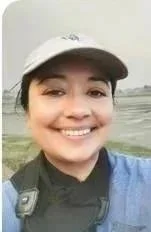
About Our Presenter: Laura E. Ibarra Flores is a Ph.D. student in Environment and Development at the Universidad Autónoma de Baja California, where her research focuses on the conservation of coastal wetlands under sea-level rise scenarios. Her work integrates spatial modeling, climate change vulnerability assessments, and community engagement to support nature-based conservation strategies for migratory shorebird habitats. Laura has contributed to conservation initiatives through the Cornell Lab of Ornithology’s Coastal Solutions Fellows Program and currently serves as a Graduate Fellow with the Road to Recovery Initiative, where she supports international conservation programs, species recovery efforts, and capacity-building initiatives. She is also a co-founder of Mujeres en Parvada, a local collective that brings birds, birdwatching, and citizen science to the community through environmental education and outreach activities. Her interests include coastal resilience, participatory conservation planning, science communication, and community-based conservation.